New Puppy Training: A Flexible 4-Week Starter Guide
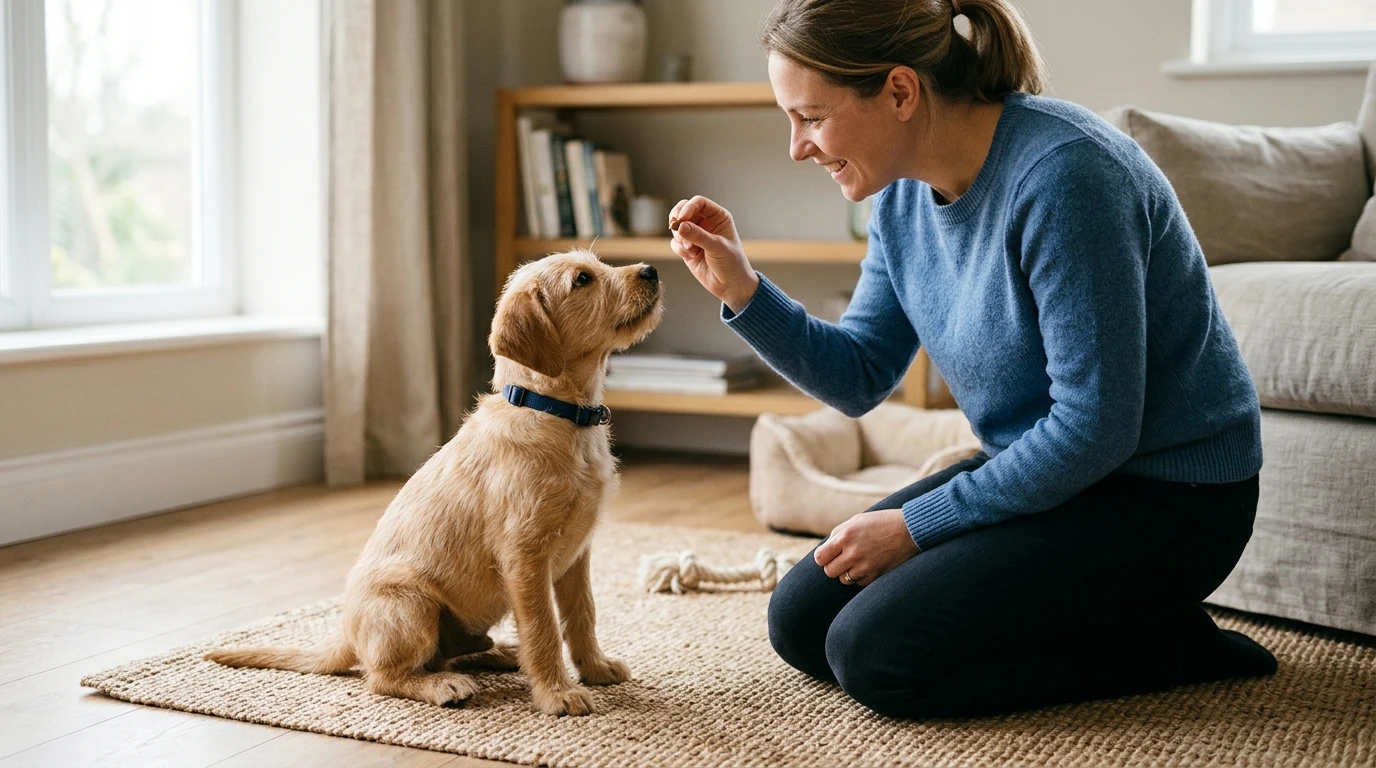
Welcome your puppy home with a calm, consistent routine. Your first month together is an opportunity to build trust, introduce useful skills, and discover what helps your puppy feel comfortable. Progress won’t look the same for every puppy, so use a flexible plan rather than expecting perfection.
Our printable New Puppy Training Starter Guide brings together four weeks of beginner-friendly house-training, commands, and socialization for $65.99. Keep it handy as you build a routine that works for your household.
Start with a predictable daily rhythm
Regular meals, outdoor breaks, play, rest, and short training sessions give your puppy a reassuring pattern to follow. You don’t need to schedule every minute, but keeping the order of activities fairly consistent can make the day easier for both of you.
Start by taking your puppy outside after waking, eating, and playing. Choose a toilet area and give them a little time to explore. When they finish in the right place, reward them promptly with praise or a small treat so they can connect the reward with the behavior.
Use the following plan as a starting point, not a deadline. You can spend longer on any stage or practice several skills at once.
| Week | Focus | Example practice |
|---|---|---|
| 1 | Settling in and house-training | Establish toilet breaks and reward your puppy for responding to their name. |
| 2 | Simple cues | Practice short, reward-based sessions for a cue such as sit. |
| 3 | Positive introductions | Introduce appropriate sights, sounds, and people at your puppy’s pace. |
| 4 | Build consistency | Practice familiar cues in different low-distraction settings. |
Make house-training a positive habit
Supervision helps you notice when your puppy may need a break. Sniffing, circling, or moving away from play can be signs that it’s time to head outside. Take your puppy out regularly rather than waiting for a signal every time, especially while you’re still learning their habits.
Stay with your puppy during toilet trips so you can reward success immediately. If an accident happens indoors, clean it thoroughly without punishment. Punishing your puppy can make them afraid to toilet around you without teaching them where to go instead.
Look for patterns and adjust your routine: an accident shortly after a meal may mean your puppy needs an earlier trip outside. Puppies differ in how often they need breaks, and their needs change as they grow. The American Kennel Club’s house-training advice offers additional practical guidance. Contact your veterinarian if toileting concerns persist or you notice signs of illness.
Teach useful first commands
Begin with your puppy’s name. Say it once in a calm voice, then reward them when they look toward you. Practice in a quiet room first, where it’s easier for your puppy to notice and respond.
Once you have their attention, introduce a simple cue such as “sit.” Reward the action when it happens, and keep your practice relaxed. For “come,” start a short distance away and reward your puppy for moving toward you. Avoid using the cue to call them into a situation they find frightening.
Several brief sessions throughout the day are more manageable than one long lesson. Use treats, praise, or another reward your puppy enjoys, and stop before they become tired or distracted. Don’t punish or physically force a response. When a skill is becoming familiar, try it in another quiet room before adding more distractions.
Socialize safely and at your puppy’s pace
Socialization means helping your puppy feel comfortable with experiences they may encounter later, not making them greet everyone. Start with gentle introductions to different people, surfaces, and everyday sounds. Pair each experience with something positive, such as a treat or calm praise.
Keep introductions short and give your puppy room to move away. If they freeze, hide, try to escape, or otherwise seem uncomfortable, increase the distance or end the encounter. For dog introductions, choose suitable, healthy dogs and avoid forcing contact.
Ask your veterinarian about vaccination timing and safer socialization options for your puppy and local area. The American Veterinary Society of Animal Behavior also provides a puppy socialization position statement to help you discuss early experiences with your veterinarian.
Keep your first month manageable
Our team recommends fitting practice into moments you already have: reward name recognition before a meal, try a few sits after a toilet break, or introduce a quiet household sound during a relaxed part of the day. Sharing the same cues and reward habits across your household can make those lessons clearer.
Some days will feel easier than others. If your puppy struggles in a new setting, return to a quieter one and practice the familiar skill again. The four-week structure in our New Puppy Training Starter Guide can help you organize those small steps without treating the calendar as a pass-or-fail test.
And if you’re also looking for a separate resource for your own routines, explore our wellness guide alongside your puppy planning.
Compare related options such as Feeding Your New Kitten Right | Essential Kitten Nutrition eBook | Learn What Food to Start a New Kitten On for Healthy Growth & Happy Mealtimes to match features, dimensions, and use case before choosing.
FAQ
What is the first thing you should teach a new puppy?
Start by helping your puppy feel safe and rewarding them for paying attention to their name. Establish a consistent house-training routine at the same time.
How long should puppy training sessions be?
Keep sessions short and positive, ending before your puppy becomes tired or distracted. Several brief practices can fit naturally into your day.
When should a puppy begin socialization?
Begin positive, age-appropriate introductions early. Ask your veterinarian how to balance socialization with vaccination-related precautions.










Leave a comment